ICF-Accredited Coach Training
Powered by NLP
ALL COACHING PROGRAMS ARE NOT CREATED EQUAL
Learn from experts who have built coaching programs for leading organizations in organizational and personal development.
This course equips you with a powerful, proven behavior-change methodology that complements your core NLP Practitioner training. Apply these life-changing principles in your coaching practice to help clients create lasting, meaningful, and empowering change.
An essential skill for coaches, mentors, consultants, and aspiring professionals ready to make a greater impact.
Member and Approved By:


You'll Learn These NLP Coaching Skills for Powerful Change Foundation:
PROGRAM OVERVIEW
This professional coach training curriculum equips participants with the mindset, skills, and competencies required for high-quality coaching in alignment with the 2025 ICF Core Competencies, the 2025 ICF Code of Ethics, and PCC (Professional Certified Coach) performance criteria.
The curriculum is organized into four developmental domains:
• Foundation • Co-Creating the Relationship • Communication • Learning & Growth
All training modules include PCC-level distinctions, ethics integration, and an emphasis on cultural sensitivity, psychological safety, and professional maturity.
Foundation
FOUNDATION is where coaches earn trust before they try to create transformation. This module hardwires the ICF Code of Ethics into real-world practice, builds the coaching mindset required at PCC level, and trains behavioral flexibility so you can stay effective when sessions get complex.
Participants learn to proactively apply ethical reasoning, protect confidentiality, hold clean boundaries, and navigate stakeholder agreements with transparency and professionalism. They develop emotional self-regulation, cultural and contextual awareness, and reflective practice so they can show up grounded, present, and client-centered every time. Finally, they sharpen cognitive and behavioral agility: reframing meaning, shifting stuck patterns, and adapting in real time using the V8 Communication™ Model to increase client choice, freedom, and forward momentum.
Co-Creating The Relationship
CO-CREATING THE RELATIONSHIP is where coaching becomes a true partnership that produces outcomes. This module trains coaches to co-create crystal-clear agreements that protect the relationship and accelerate results, then sustain that partnership through obstacles, decisions, trust-building, and grounded presence.
Participants learn to establish and revisit engagement and session agreements as client awareness evolves: goals, roles, responsibilities, success measures, logistics, and ethical closure. They develop the ability to help clients identify obstacles without diagnosing, convert goals into achievable outcomes, and support forward momentum through autonomy-based strategy creation. The module also strengthens the coach’s ability to facilitate client-generated decisions rooted in values and motivation, while building psychological safety through empathy, cultural humility, and relational transparency. Finally, coaches deepen embodied presence: staying calm and attuned in ambiguity, using silence skillfully, and navigating strong emotion without losing the session.
Communication Effectively
COMMUNICATING EFFECTIVELY trains coaches to hear what clients mean, not just what they say, then convert that data into insight, clarity, and forward movement. This module builds PCC-level communication mastery through multilevel listening, neutral comprehension, and awareness-evoking dialogue that expands perspective without hijacking the client’s meaning-making.
Participants develop deep listening across verbal, non-verbal, emotional, and systemic signals, tracking patterns over time and noticing shifts in energy, values, and context. They learn to reflect with precision, build rapport through attuned sensitivity, and interpret cues without assumptions or projection. From there, coaches sharpen their ability to evoke awareness using powerful questions, metaphor, silence, and clean challenge, helping clients reframe perspectives, recognize what is working, identify obstacles, and access critical insight. A core skill is unattachment: staying fully engaged while remaining neutral, flexible, and client-led in complex moments.
Cultivating Learning & Growth
CULTIVATING LEARNING & GROWTH is where coaching stops being a great conversation and becomes measurable change. This module trains coaches to turn insight into action, reinforce autonomy, and build sustainable transformation through accountability, integration, and session structures that drive progress.
Participants learn to co-create goals, actions, and accountability measures that match the client’s motivation and real-life context, then extract learning from action steps to accelerate growth. Coaches also develop the ability to support internal change without diagnosing or advising: identifying the client’s underlying thought and emotional structures, breaking self-imposed limitations, and strengthening confidence and internal resources. Finally, the module teaches future-oriented integration: helping clients reframe past experiences, release unhelpful patterns, and harmonize past learning with future possibility to create momentum, curiosity, and big-picture direction.
Program Completion Requirements
Active participation in all training modules
Demonstration of coaching competencies at a PCC-aligned level
Ethical practice consistent with the 2025 ICF Code of Ethics
Completion of all deliverables and assessments
Demonstration of cultural responsiveness and psychological safety
Ability to articulate and embody all 2025 Core Competencies
This syllabus is fully compliant with:
ICF 2025 Core Competencies
ICF 2025 Code of Ethics
PCC Performance Evaluation Criteria

Frequently Asked Questions
Is Brigitta Hoeferle's coach training ICF accredited?
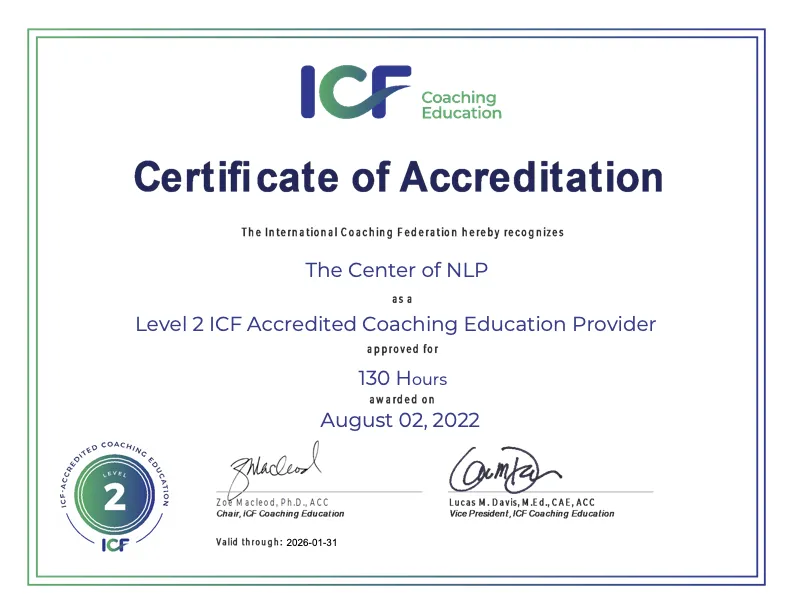
Yes. Brigitta is a ICF Master Certified Coach, a ICF certified Mentor Coach and ICF certified Evaluator. Her company is ICF Level 2 Coach Training accreditated, which means graduates of her program are eligible to apply for the ICF PCC (Professional Certified Coach) credential. The program meets ICF's rigorous standards for coach education, supervised coaching hours, and competency assessment.
What is the difference between NLP training and life coaching?
NLP training teaches the underlying behavioral and linguistic models that drive human behavior and results — it's a methodology. Life coaching applies conversational frameworks to help clients set and achieve goals. Brigitta's programs integrate both and more: her coaches learn NLP as the behavioral change engine that powers more effective, results-driven coaching conversations.
What is the ICF PCC credential and who is it for?
The ICF PCC (Professional Certified Coach) is the professional credential from the International Coaching Federation, requiring coaching experience and a training program from an ICF-accredited provider. It is ideal for coaches building a professional practice and signals credibility to corporate and private clients worldwide.
Can I take the coach training program online?
Yes. Brigitta Hoeferle's ICF coach training and NLP certification programs are available online, allowing participants worldwide to complete their credentials remotely. Live virtual sessions are included alongside self-paced content, and supervised coaching hours can be completed with clients of your choosing.
How long does the coach training program take?
Program length varies by certication level. NLP Practitioner and Master Practitioner certications have intensive formats over several days to weeks. ICF coach training follows a longer path to meet ICF's required training hours. Contact Brigitta's team for current program schedules at brigittahoeferle.com/book-a-call.
What is The Center of NLP?
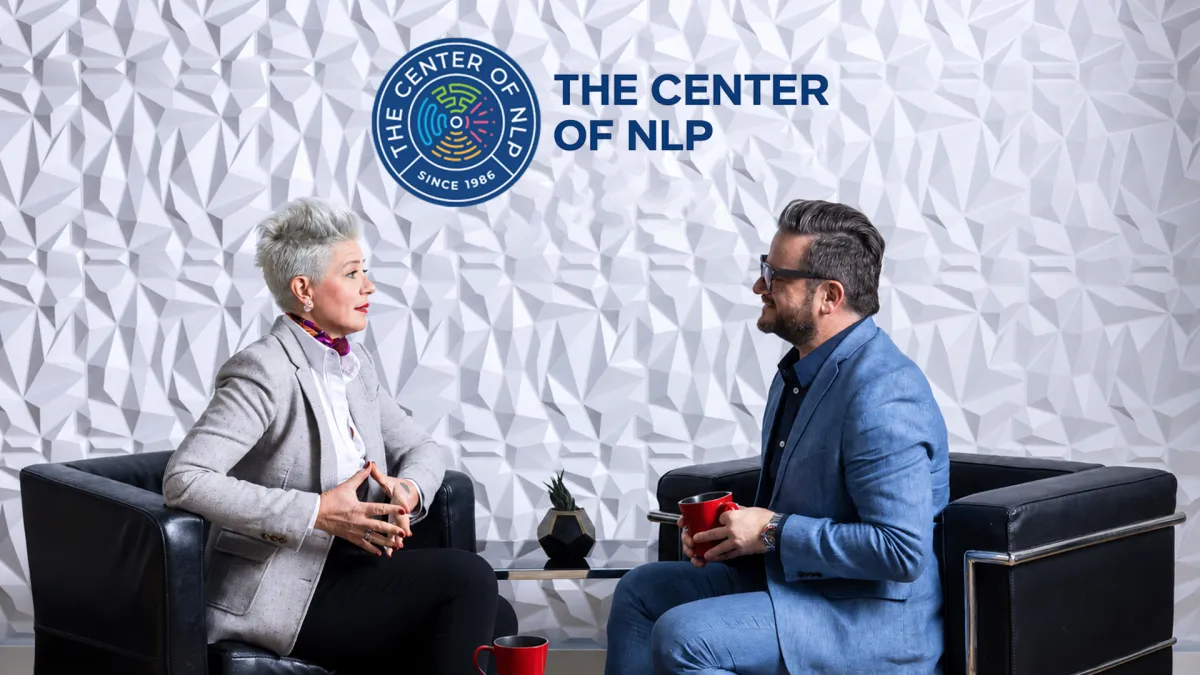
The Center of NLP, established in 1986, is one of the longest-running NLP training institutions in the world. Brigitta Hoeferle serves as CEO and master trainer. The Center offers NLP Practitioner Courses, NLP Master Practitioner Certifications, NLP Coach and NLP Trainer Programs in direct lineage to the founders of NLP.
What certications will I earn from Brigitta's programs?
Depending on the program, graduates can earn NLP Practitioner, NLP Master Practitioner, or NLP Trainer certications through The Center of NLP, as well as ICF PCC credential eligibility through the ICF Level 2 Coach Training Program. Additional certificates offered are amongst others EQ, MBSR - Mindfulness, and Conflict Resolution are available.
What does the coaching process involve?
A structured process moving from assessment, to identifying specific patterns, to practicing new ones in real situations. The four curriculum domains covered on this page give the detailed breakdown; this is the short version for anyone landing here first.
What is ICF coach training, and how does the PCC pathway work?
ICF coach training prepares you to become a credentialed coach through the International Coaching Federation's PCC pathway. Brigitta's program is aligned to the ICF's 2025 Core Competencies, so training hours and skill development map directly to what's required for credentialing.






Copyright © 2026 | All Rights Reserved
Terms of Services | Privacy Policy