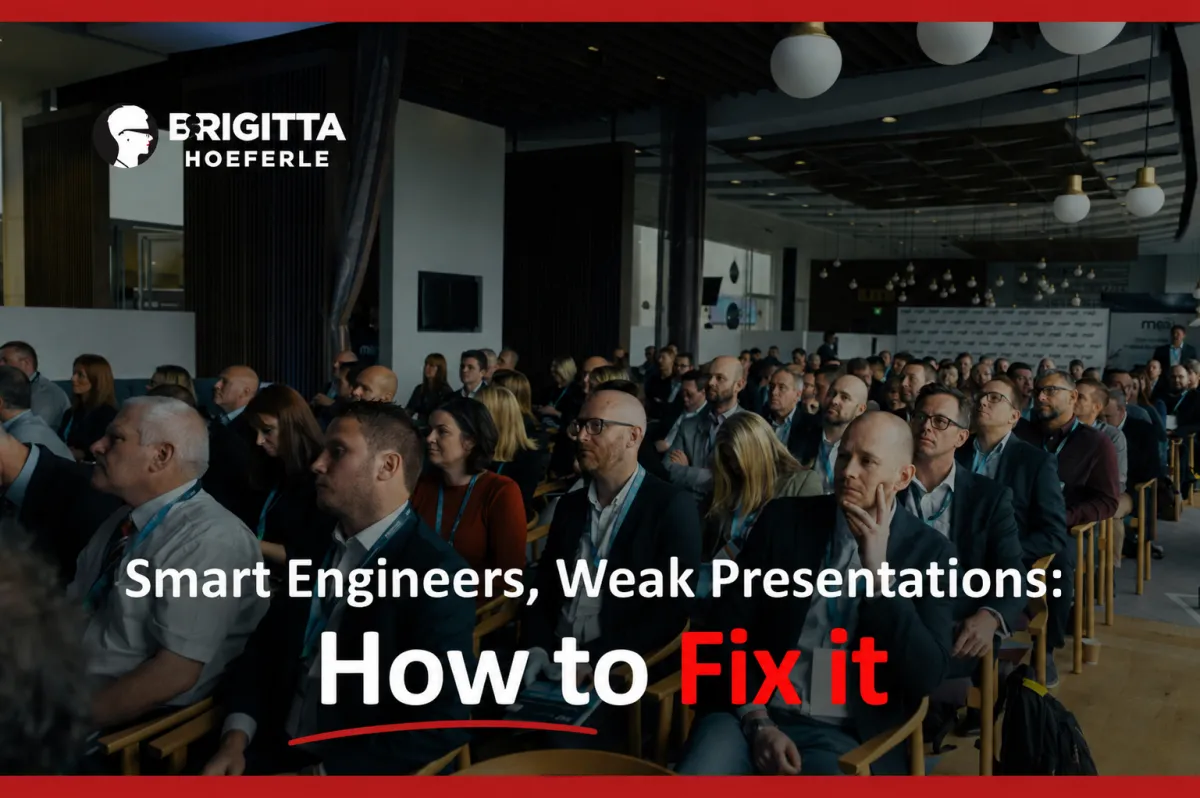
Smart Engineers, Weak Presentations: Fix It
Smart Engineers, Weak Presentations: How to Fix It
Some of the brightest engineers have groundbreaking ideas that never receive the recognition they deserve.
The problem is rarely technical ability. More often, it comes down to communication.
In today's workplace, technical expertise alone is no longer enough to advance your career. Engineers who can explain complex concepts clearly, influence decisions, and inspire confidence often become the professionals trusted with leadership roles, client presentations, and high-impact projects. Those who struggle to communicate may find their ideas overlooked, even when they are technically superior.
That is why presentation skills for engineers have become just as valuable as technical knowledge. Whether you are presenting a project update, explaining a design solution, or speaking with clients, your ability to communicate clearly can shape how others perceive your expertise.
The good news is that effective communication is not a natural talent reserved for a few people. It is a skill that can be learned, practiced, and refined. By improving your communication skills, developing confidence, and becoming more comfortable with public speaking, you can present your ideas with clarity and credibility while making a lasting impact.
Why Great Engineers Need Great Communication Skills
Engineering is built on logic, analysis, and problem-solving. However, solving a problem is only part of the job. You must also explain your solution to managers, clients, teammates, and stakeholders who may not share your technical background.
Strong presentation skills for engineers help bridge that gap.
When you communicate effectively, people understand your ideas faster, trust your recommendations, and feel more confident supporting your decisions. Clear communication also reduces misunderstandings, improves collaboration, and helps projects move forward more efficiently.
Engineers who develop strong communication skills often become influential contributors because they can combine technical expertise with the ability to connect with any audience.
Why Logical Thinkers Often Struggle With Public Speaking
Many engineers are naturally logical thinkers. They enjoy solving complex problems, analyzing data, and focusing on facts rather than emotions.
These strengths make them exceptional engineers, but they can also create challenges during presentations.
Common obstacles include:
Including too much technical detail.
Assuming the audience already understands complex terminology.
Focusing on information instead of the audience's needs.
Speaking too quickly when nervous.
Avoiding eye contact or audience interaction.
These habits can make even brilliant ideas difficult to follow.
The challenge is not intelligence or expertise. It is learning how to communicate technical information in a way that is engaging, memorable, and easy to understand.
Fortunately, improving public speaking does not require changing the way you think. It simply requires adapting how you share your knowledge.
Why Presentation Skills Matter for Career Growth
Strong presentation skills for engineers create opportunities that technical expertise alone cannot.
Engineers who communicate confidently are more likely to:
Lead important projects.
Present innovative ideas to leadership.
Build stronger relationships with clients.
Influence business decisions.
Mentor colleagues and guide teams.
When your audience understands your message, they are more likely to trust your recommendations and recognize your expertise.
Developing strong confidence in front of an audience also helps reduce anxiety and allows your personality to complement your technical knowledge.
How Engineers Can Communicate Complex Ideas Clearly
The most effective presentations are not the ones with the most information. They are the ones that make complex information easy to understand.
Improving your communication skills starts with thinking about your audience before your content.
Ask yourself:
What does my audience already know?
What do they need to understand?
What decision or action should they take after this presentation?
By answering these questions, you naturally organize information in a way that is logical, relevant, and engaging.
Clear communication is not about simplifying your expertise. It is about making your expertise accessible.
Practical Techniques to Improve Presentation Skills for Engineers
Strong presentation skills for engineers are built through preparation, practice, and purposeful communication. These techniques can help you deliver presentations that are clear, engaging, and memorable.
1. Focus on the Main Message First
Many engineers begin with technical details. Instead, start with the key takeaway.
Ask yourself:
What is the one idea I want my audience to remember?
What problem does this presentation solve?
Why should my audience care?
Leading with the main message gives your audience context before you dive into the details, making your presentation easier to follow.
2. Simplify Complex Technical Concepts
Your expertise is valuable, but your audience may not share the same technical background.
Use simple language whenever possible and explain unfamiliar terms before using them. Visual examples, analogies, and real-world scenarios can also help make complex ideas more accessible.
The goal is not to oversimplify your work. It is to ensure everyone understands its value.
3. Practice Public Speaking With Purpose
Improving public speaking takes consistent practice, not perfection.
Before your presentation:
Rehearse out loud instead of reading silently.
Time your presentation to stay within the allotted schedule.
Record yourself and identify areas for improvement.
Practice answering likely questions.
Each practice session builds greater confidence and helps you communicate more naturally.
4. Engage Your Audience Throughout the Presentation
Great presentations are conversations, not lectures.
Maintain eye contact, vary your tone of voice, and pause after important points to give your audience time to absorb the information.
Encourage questions when appropriate and watch for audience reactions so you can adjust your pace or explanation if needed.
Strong audience engagement transforms technical presentations into meaningful discussions.
5. Let Confidence Grow Through Preparation
Many professionals believe confidence comes first.
In reality, confidence usually follows preparation.
The more familiar you are with your material, the more comfortable you will feel delivering it. Thorough preparation reduces uncertainty and allows you to focus on connecting with your audience instead of worrying about every word.
Over time, these experiences help engineers develop lasting confidence in every presentation.
A Real-World Example
A software engineer was responsible for presenting a new system architecture to company executives. Previous presentations were filled with technical terminology, making it difficult for non-technical stakeholders to understand the proposal.
Before the next presentation, the engineer changed their approach.
Instead of beginning with technical specifications, they started by explaining the business problem, the proposed solution, and the expected benefits. Complex diagrams were replaced with simple visuals, and technical terms were explained using everyday language.
The result was immediate. Executives quickly understood the recommendation, approved the project, and praised the presentation for its clarity.
The engineer's technical expertise had not changed. Their presentation skills for engineers had.
The Benefits of Strong Presentation Skills
Developing effective presentation skills offers benefits that extend well beyond the conference room.
Engineers with strong communication skills are better equipped to:
Explain technical concepts to diverse audiences.
Collaborate more effectively across departments.
Build trust with clients and stakeholders.
Lead meetings with clarity and professionalism.
Increase their influence within their organizations.
Advance into leadership and management roles.
Clear communication allows your technical expertise to receive the recognition it deserves.
Key Takeaways
Presentation skills for engineers are essential for career growth and professional influence.
Even highly logical thinkers can become confident presenters with consistent practice.
Strong communication skills make complex ideas easier for any audience to understand.
Preparation and regular public speaking practice are the fastest ways to build lasting confidence.
Clear presentations strengthen collaboration, improve decision-making, and help engineers showcase their expertise.
Frequently Asked Questions
Why are presentation skills important for engineers?
Strong presentation skills for engineers help communicate technical ideas clearly, improve collaboration, build credibility, and create opportunities for career advancement.
Why do logical thinkers struggle with public speaking?
Many logical thinkers focus on technical accuracy rather than audience understanding. Learning to simplify complex ideas and engage listeners makes presentations far more effective.
How can engineers build confidence when presenting?
The best way to build confidence is through preparation, regular practice, and gaining experience with public speaking in different professional settings.
What are the most important communication skills for engineers?
Active listening, clear organization, audience awareness, concise explanations, and confident delivery are among the most valuable communication skills engineers can develop.
Turn Technical Expertise Into Lasting Influence
Technical knowledge may open doors, but strong communication helps you lead, inspire, and make a lasting impact. By strengthening your presentation skills for engineers, improving your communication skills, and practicing public speaking consistently, you can communicate complex ideas with clarity, earn greater trust, and present with lasting confidence.
Take the next step toward becoming a more effective communicator and making every presentation count.