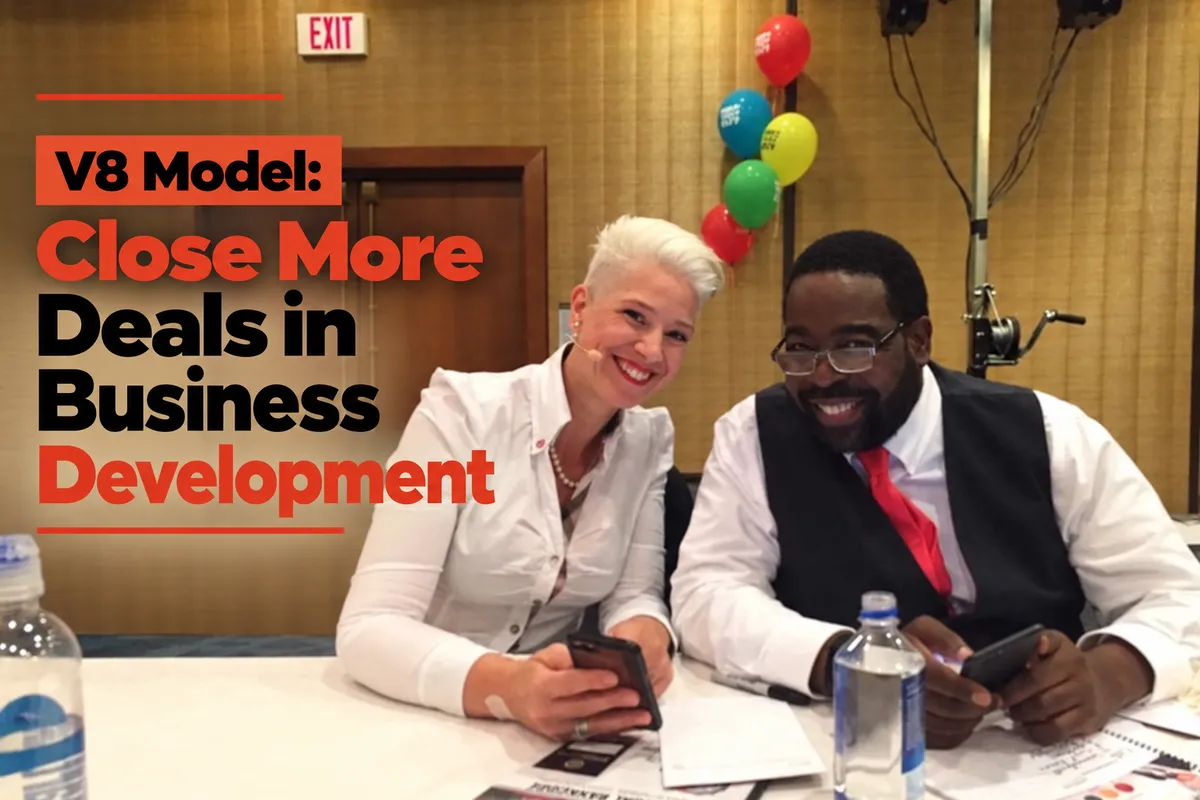
V8 Sales Model: Close More Deals in Business Development
More sales activity does not always create more revenue.
A team can make calls, book meetings, send follow-ups, and keep the CRM full without seeing enough deals reach the finish line. When that happens, adding even more activity rarely solves the real problem.
The issue may be how opportunities are being handled.
High-performing business development teams need more than persistence. They need a sales framework that helps them have better conversations, recognize worthwhile opportunities, and keep deals moving.
That is where the V8 Sales Model comes in.
Rather than relying on individual sales habits, the model provides a more structured way to approach business development, from the first conversation through to the close.
Why Sales Teams Lose Momentum
A prospect can show interest without being ready to buy.
They may have a genuine problem but no urgency. They may like the solution but lack the authority to approve it. Or they may agree to another conversation without having a clear reason to take one.
These situations can quietly fill a pipeline with opportunities that look promising but rarely progress.
That is why pipeline performance should not be measured by opportunity count alone. What matters is whether the right opportunities are moving forward.
A structured approach helps sales teams see that difference earlier.
What Is the V8 Sales Model?
The V8 Sales Model is a practical approach to business development that brings greater structure to the way sales professionals manage opportunities and conversations.
At its heart, the model encourages salespeople to understand the buyer before trying to sell to them. It puts attention on the quality of the opportunity, the value of the solution, and the actions needed to move the deal forward.
This matters because most deals are not won with one brilliant closing line.
They are built through a series of good decisions. The right questions are asked. The real business problem is uncovered. Concerns are addressed. Value becomes clear. Both sides know what happens next.
The V8 approach brings those parts of the process into a more consistent sales method.
How the V8 Sales Model Supports the Sales Process
A useful sales model should make conversations better, not make them sound scripted.
The V8 approach can help sales professionals focus on four important areas throughout an opportunity.
Understand What the Buyer Actually Needs
The first conversation should not become a product presentation.
A prospect may tell you they need more leads, lower costs, better technology, or faster growth. Those answers are useful, but they are only the starting point.
Good business development professionals dig deeper.
They find out what is causing the problem, how it affects the business, and why solving it matters now. That context makes the rest of the sales conversation far more relevant.
Separate Interest From Opportunity
Not every interested prospect belongs in the active pipeline.
A strong opportunity has more behind it than a positive first conversation. There should be a genuine need, reasonable fit, buyer engagement, and some indication that the business is prepared to act.
This does not mean rejecting prospects too quickly.
It means knowing where to invest sales training time and where a lighter-touch follow-up makes more sense.
Connect the Solution to the Business
Once the problem is clear, the solution needs to make sense in that context.
Instead of listing every feature or capability, the salesperson can focus on what is most relevant to the prospect. The conversation becomes about the business outcome rather than everything the company happens to sell.
That makes value easier for the buyer to understand.
Keep the Deal Moving
Good sales conversations create progress.
That might mean introducing another decision-maker, reviewing a proposal, scheduling a demonstration, or agreeing on a timeline.
The specific next step will vary from deal to deal. What matters is that there is one.
Without a clear next action, even strong opportunities can gradually lose momentum.
Where Business Development Teams Can Improve
The V8 Sales Model becomes most useful when it changes what happens during everyday sales activity.
Stop Treating Every Lead the Same
A new inquiry, a qualified opportunity, and a prospect who has gone silent should not receive the same level of attention.
Prioritizing opportunities based on need, fit, engagement, and timing allows salespeople to spend more of their day on prospects with real potential.
That can improve productivity without requiring a larger lead list.
Ask Better Questions
Good questions reveal information that a sales pitch cannot.
Instead of immediately explaining what the company offers, ask what the prospect is trying to improve, what is currently getting in the way, and what would make a solution worthwhile.
The answers help shape the conversation naturally.
Make Every Follow-Up Count
A follow-up should continue the conversation.
If a prospect raised a concern about implementation, address it. If they mentioned a specific business challenge, respond to that challenge. If they agreed to involve another stakeholder, make that the next action.
A useful follow-up feels connected to the conversation that came before it.
Address Concerns Before the Final Stage
Price is not always the real objection.
A prospect may be worried about timing, internal approval, implementation, risk, or whether the expected result justifies the investment.
Finding those concerns early gives the salesperson time to work through them. Waiting until the final stage can make an otherwise manageable issue much harder to resolve.
How Better Pipeline Management Supports Closing
Closing becomes difficult when the earlier stages of the sales process have been handled poorly.
If the salesperson never established the business problem, the value may feel unclear. If the decision-makers were never identified, the deal can stall internally. If objections were ignored, they can suddenly appear when the contract is ready.
This is why effective closing strategies are not limited to the final sales meeting.
A stronger close is usually the result of stronger work earlier in the opportunity.
When the buyer understands the problem, sees the value, has had concerns addressed, and knows the next step, there is less need for pressure at the end.
A Simple Example
Imagine a business development team with a healthy flow of leads but a disappointing conversion rate.
The team initially assumes it needs more prospects. But after reviewing the pipeline, it finds that many opportunities are poorly qualified. Salespeople are also following up differently, and several promising prospects have no agreed next step.
The problem is not lead generation.
It is what happens after the lead enters the pipeline.
With a more structured V8 approach, the team can spend more time understanding buyer needs, qualifying opportunities, connecting solutions to real business problems, and creating clear next steps.
The result is not simply a cleaner CRM.
It is a sales team spending more time on opportunities that have a realistic chance of becoming business.
Why a Repeatable Sales Framework Matters
Experienced salespeople develop strong instincts.
They know how to read a conversation, recognize buying signals, and handle unexpected objections. But when every salesperson follows a completely different process, those strengths can be difficult to scale across a team.
A shared sales framework gives everyone a common starting point.
It also makes coaching more practical. Instead of telling a salesperson to "close harder," a sales leader can look at where the opportunity lost momentum and address the specific issue.
That creates a better foundation for long-term business development.
Key Takeaways
More sales activity does not guarantee better results. The process behind that activity matters.
The V8 Sales Model gives business development teams a structured approach to managing conversations and opportunities.
A healthy pipeline is built around qualified, engaged opportunities, not simply a high number of prospects.
Understanding the buyer's real problem makes it easier to communicate relevant value.
Strong closing strategies begin well before the final sales conversation.
Clear next steps help prevent good opportunities from going cold.
A repeatable sales framework gives teams a stronger foundation for coaching and consistent growth.
Quick Answers
What is the V8 Sales Model?
The V8 Sales Model is a structured approach to business development that helps sales professionals manage buyer conversations, evaluate opportunities, and create a clearer path toward conversion.
How does the V8 Sales Model improve pipeline performance?
It encourages teams to focus on opportunity quality, buyer engagement, genuine need, and clear next steps instead of relying on pipeline volume alone.
Why do sales opportunities stop moving?
Deals often stall because the need is unclear, the wrong people are involved, objections have not been addressed, or there is no agreed next step.
How does the V8 Sales Model support closing?
The model focuses on the work that makes closing easier, including understanding the buyer, establishing value, addressing concerns, and maintaining momentum throughout the opportunity.
Should every lead receive the same amount of attention?
No. Sales teams should prioritize opportunities based on factors such as fit, need, engagement, urgency, and buying potential.
Why use a sales framework?
A sales framework gives teams a consistent process that can be coached, measured, and improved. It helps reduce reliance on individual habits while still allowing experienced salespeople to use their judgment.
Build a Sales Process That Moves Opportunities Forward
The goal of business development is not to keep the pipeline busy.
It is to build a pipeline that can produce real business.
The V8 Sales Model gives sales teams a structured way to improve the conversations, decisions, and follow-through that make that possible.