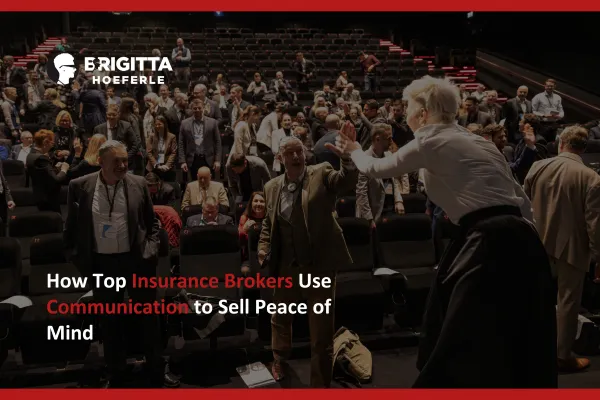
Communication Training for Insurance Brokersost
How Top Insurance Brokers Use Communication to Sell Peace of Mind
Most insurance conversations do not end because the policy was too expensive.
They end because the client never felt understood.
Insurance brokers spend years learning coverage options, policy details, regulations, and industry requirements. That technical knowledge is essential, but it is rarely the only factor that determines whether a client moves forward.
Before clients compare premiums, deductibles, or policy limits, they are asking themselves a more important question:
Can I trust this broker to help protect what matters most to me?
That trust starts with communication.
The most effective insurance professionals understand that selling insurance is not simply about presenting products. It is about understanding people, uncovering concerns, explaining complex information clearly, and guiding clients toward informed decisions.
This is where communication training for insurance brokers can create a meaningful advantage.
By developing stronger communication skills and understanding human behavior in sales, brokers can create more productive conversations, handle objections with greater confidence, build stronger relationships, and deliver an experience that clients remember.
In a competitive insurance market, product knowledge gets you into the conversation. Exceptional communication helps you earn trust and win the relationship.
Why Insurance Sales Are Really About Trust
Insurance is different from most everyday purchases.
Clients are not buying something they necessarily expect to use tomorrow. They are investing in protection for situations they hope never happen.
Whether they are purchasing life insurance, health insurance, business coverage, homeowners insurance, or another type of protection, the decision can involve uncertainty, financial concerns, and deeply personal priorities.
That is why trust plays such an important role.
A client who feels heard is more likely to ask questions, explain their concerns, and share the information a broker needs to understand their situation. A conversation focused only on premiums, policy features, and technical details can miss the personal reasons behind the decision.
Top-performing brokers build trust before they recommend a policy.
They ask thoughtful questions. They listen carefully. They acknowledge concerns. They explain options clearly. Most importantly, they make the conversation about the client's needs rather than simply the product.
That changes the relationship.
Instead of viewing the broker as someone trying to sell a policy, the client begins to see them as a trusted advisor helping them make an important decision.
How Communication Training Gives Insurance Brokers a Competitive Advantage
Improving insurance sales is not always about learning another closing technique or memorizing another sales script.
Often, the greater opportunity is learning how to communicate more effectively throughout the entire client journey.
Effective communication training can help insurance brokers develop practical skills for:
Building trust during the first conversation
Asking better discovery questions
Practicing active listening
Identifying client concerns and hesitation
Explaining complex insurance concepts in plain language
Responding to objections without creating pressure
Adapting communication to different client needs
Creating personalized recommendations
Strengthening follow-up conversations
Building relationships that support renewals and referrals
These skills help conversations feel more natural and less transactional.
When clients believe their broker understands their situation, they can engage more confidently in the decision-making process. Clear communication also reduces confusion and helps prevent misunderstandings that can damage trust.
The result is a better client experience and a stronger foundation for long-term business growth.
Understanding Human Behavior in Sales Changes the Conversation
Successful insurance brokers understand that clients do not make decisions based on facts alone.
Facts matter. Coverage matters. Price matters.
But the way clients feel during the conversation can also influence how they evaluate their options and the professional guiding them.
A family purchasing life insurance may be focused on protecting their children's future. A business owner may be concerned about financial risk and continuity. A first-time buyer may simply want reassurance that they are making a responsible decision.
Each client enters the conversation with different concerns, priorities, experiences, and expectations.
This is why understanding human behavior in sales is such a valuable skill for insurance professionals.
Communication training can help brokers become more attentive to what clients are saying, how they are responding, and where uncertainty may be affecting the conversation.
Instead of assuming what a client wants, skilled brokers ask better questions, listen for underlying concerns, and adjust their communication accordingly.
When brokers understand the reason behind hesitation, they can address the actual concern instead of immediately trying to overcome the objection.
What Clients Are Really Looking For
Most clients are not simply searching for the "perfect" insurance policy.
They are looking for confidence in the person helping them choose it.
That confidence comes from a broker who:
Listens without interrupting
Explains information clearly
Answers questions honestly
Acknowledges concerns
Avoids unnecessary pressure
Connects recommendations to the client's priorities
Provides guidance throughout the decision-making process
Clients may forget specific policy terminology over time, but they are far more likely to remember whether they felt respected, heard, and confident during the conversation.
That experience can become one of a broker's strongest competitive advantages.
Communication Skills Every Insurance Broker Should Master
Technical expertise establishes credibility.
Communication builds trust.
The strongest insurance professionals combine both.
1. Active Listening Creates Better Recommendations
One of the most common communication problems in sales is preparing the next response before the client has finished speaking.
Active listening changes the conversation.
Instead of immediately recommending coverage, effective brokers focus on understanding the client's situation first. They ask open-ended questions, listen carefully, clarify important details, and then connect their recommendation to what they have learned.
Questions such as:
"What concerns you most about your current coverage?"
"What would give you greater peace of mind?"
"What prompted you to start looking at insurance today?"
can reveal much more than a basic checklist of policy requirements.
Active listening also encourages clients to share information they may not have considered important initially.
The better the broker understands the situation, the more relevant the conversation becomes.
2. Empathy Strengthens Trust
Empathy does not mean agreeing with every client concern.
It means recognizing the concern and showing the client that it has been heard.
For example, a client may hesitate because of rising insurance premiums.
Instead of immediately defending the price, an empathetic broker could say:
"I understand why that feels like a significant investment. Let's look at what you're protecting and explore the options that provide the right balance of value and coverage for your needs."
The response acknowledges the concern without turning the conversation into a debate.
That creates a more collaborative discussion and gives the broker an opportunity to address the client's actual priorities.
3. Clear Communication Reduces Uncertainty
Insurance terminology can quickly overwhelm clients.
Words such as deductibles, exclusions, riders, endorsements, replacement cost, and liability limits may be familiar to insurance professionals but confusing to someone purchasing coverage.
Strong communication skills for insurance brokers include translating technical information into language clients can understand.
Instead of saying:
"Your comprehensive policy includes replacement cost coverage subject to policy limitations."
A broker could explain:
"If a covered event damages your home, this coverage may help pay to replace damaged property rather than simply paying its current depreciated value, subject to the terms and limits of your policy."
The goal is not to remove important details.
The goal is to make those details understandable.
When clients understand what they are purchasing, they can make decisions with greater confidence.
4. Asking Better Questions Leads to Better Solutions
Great insurance conversations are not one-sided presentations.
They are guided discussions.
Thoughtful questions help brokers uncover information clients may not volunteer without prompting.
Instead of asking only about income, assets, or existing policies, brokers can explore goals, concerns, experiences, and future changes.
For example:
What changes are you expecting over the next few years?
What would create the biggest financial challenge for your family or business?
Have you had a positive or negative experience with insurance in the past?
What matters most to you when choosing an insurance advisor?
What concerns would you like this coverage to address?
These questions provide context that helps brokers make recommendations based on the client's actual situation rather than assumptions.
5. Confident Objection Handling Keeps Conversations Productive
Objections are not always signs that a client wants to end the conversation.
A question about price may indicate affordability concerns. A request for more information may signal uncertainty. A comparison with another provider may mean the client is still evaluating value.
Instead of treating every objection as something to "overcome," brokers can use it as an opportunity to understand what is preventing the client from feeling confident.
A useful approach is:
Listen → Clarify → Acknowledge → Explain → Confirm
This keeps the conversation focused on understanding rather than pressure.
Strong objection handling is not about having the perfect comeback. It is about creating enough clarity and confidence for the client to make an informed decision.
Common Communication Mistakes That Cost Insurance Brokers Clients
Even experienced insurance professionals can unintentionally create barriers to trust.
Recognizing these mistakes can help brokers improve every client interaction.
Talking More Than Listening
Clients do not need a complete product presentation before they have explained what they need.
Leading with policy features can make a conversation feel transactional.
Strong brokers listen first, understand the situation, and then tailor their recommendations.
Focusing on Price Instead of Value
Price is important to clients, but it is not always the only consideration.
When the conversation immediately becomes a competition over cost, brokers can lose the opportunity to explain the value of the protection, guidance, service, and expertise they provide.
Instead of simply defending a premium, connect the coverage to what the client is trying to protect.
Assuming Every Client Communicates the Same Way
Some clients want detailed explanations.
Others want concise recommendations.
Some need time and reassurance before making a decision, while others value speed and efficiency.
Effective communication training for insurance brokers teaches professionals to recognize these differences and adapt their communication style without losing authenticity.
Using Too Much Industry Language
Insurance professionals often forget how unfamiliar industry terminology can sound to clients.
Overusing technical language can create confusion and make clients hesitant to ask questions.
Clear, conversational explanations help clients understand their options and reinforce the broker's role as a trusted advisor.
Turning Every Conversation Into a Sales Pitch
Not every client interaction needs to end with a hard close.
Sometimes the most valuable next step is answering a question, clarifying coverage, or helping a client understand their options.
When brokers focus on creating value throughout the relationship, sales become a natural result of trust rather than the sole purpose of the conversation.
A Five-Step Communication Framework for Better Insurance Conversations
A strong insurance conversation starts with a simple principle:
Listen before you recommend.
Communication training can help brokers replace rigid sales pitches with meaningful conversations that uncover what clients actually need.
Use this five-step framework to create more productive conversations.
1. Connect Before You Sell
First impressions matter.
Clients begin forming an opinion about a broker quickly. They notice whether the broker appears attentive, interested, and prepared to understand their situation.
Start with curiosity rather than a presentation.
Ask questions such as:
What brought you in today?
What are your biggest concerns about your current coverage?
What would make you feel more confident about your insurance decisions?
These questions shift the focus from the product to the person.
2. Listen to Relate, Not to Respond
Hearing the words is only part of listening.
The goal is to understand the concern behind them.
A client repeatedly asking about price may be concerned about affordability. A business owner asking detailed questions may want reassurance before making a long-term commitment.
Instead of immediately responding, stay curious.
Try follow-up questions such as:
"Can you tell me more about that concern?"
or
"What makes that especially important to you?"
These questions can reveal the information needed to guide the conversation effectively.
3. Personalize Every Recommendation
No two clients have exactly the same priorities.
A growing family may focus on financial protection. A business owner may prioritize risk management. A first-time insurance buyer may need more education and reassurance.
Strong brokers connect recommendations to what matters most to the individual client.
Rather than giving every client the same explanation, personalize the conversation around their goals, concerns, and circumstances.
4. Simplify Complex Information
Insurance should not feel complicated simply because the subject is technical.
Clients need to understand:
What the coverage protects
Why the coverage matters
When the coverage applies
What limitations or exclusions may affect it
How the coverage relates to their goals
Simple communication does not mean leaving out important information.
It means presenting important information in a way the client can understand.
5. End Every Conversation With Clarity
Strong client conversations should not end with uncertainty.
Before concluding, summarize what you heard, confirm the client's priorities, and explain what happens next.
For example:
"Based on what you've shared, protecting your family's financial future while keeping your monthly costs manageable are your biggest priorities. I'll prepare a few options that align with those goals, and we'll review them together."
This reinforces that the recommendation is based on the client's needs rather than a one-size-fits-all approach.
What Communication Training Can Help Insurance Brokers Improve
Communication training is most valuable when it translates directly into better client interactions.
Depending on the training approach, insurance professionals can develop skills in:
Active listening
Discovery conversations
Client communication styles
Emotional intelligence
Empathy
Objection handling
Difficult conversations
Clear policy explanations
Consultative selling
Relationship building
Follow-up communication
Confident presentations
The objective is not to make every broker sound the same.
It is to help each professional communicate with greater clarity, confidence, awareness, and consistency.
When these skills become part of everyday client interactions, brokers can create a more professional experience from the first conversation through renewals and ongoing service.
Why Strong Communication Builds Long-Term Client Relationships
Insurance is built on relationships, not just transactions.
A policy may generate immediate revenue, but a strong client relationship can create value over time.
Clients who have confidence in their broker may be more likely to:
Renew their policies
Explore additional coverage as their needs change
Seek advice during major life or business decisions
Refer friends, family, or colleagues
Continue working with a broker they trust
This is where relationship building in insurance sales becomes a meaningful competitive advantage.
Strong relationships are built through consistent communication, not occasional follow-ups.
A check-in after a policy is issued, a clear explanation of a coverage update, or a timely conversation before renewal can demonstrate that the broker is invested in the client's experience beyond the initial sale.
Over time, those interactions can turn a policyholder into a long-term client and advocate.
Communication Is a Competitive Advantage for Insurance Brokers
Today's clients have access to more information than ever.
They can compare quotes online, research coverage, read reviews, and evaluate providers before speaking with a broker.
What digital tools cannot replace is a trusted professional who can understand the client's concerns, explain complex decisions clearly, and provide personalized guidance.
That is why insurance broker training should extend beyond product knowledge.
The brokers who stand out are not necessarily those with the lowest premiums or the largest product portfolios.
They are professionals who can combine technical expertise with strong communication, active listening, empathy, and a genuine understanding of client behavior.
Investing in communication training can strengthen every stage of the client journey, from the first conversation to policy reviews, renewals, referrals, and long-term relationship building.
When brokers communicate with clarity and confidence, they move beyond competing on price alone.
They become trusted advisors.
Key Takeaways
Communication training for insurance brokers helps build trust before conversations focus on products or pricing.
Understanding human behavior in sales helps brokers recognize concerns, motivations, and hesitation.
Strong communication skills for insurance brokers improve active listening, empathy, clarity, and objection handling.
Personalized conversations help clients feel understood and more confident in their decisions.
Clear explanations reduce confusion around complex insurance concepts.
Strong communication supports better client experiences and long-term relationship building.
Combining technical expertise with communication skills gives insurance professionals a meaningful competitive advantage.
Build Stronger Client Conversations With Communication Training
Your insurance expertise is valuable. The way you communicate that expertise can determine whether clients understand it, trust it, and act on it.
With the right communication training, insurance professionals can develop stronger listening skills, communicate complex information more clearly, handle difficult conversations with confidence, and build relationships that extend beyond the initial sale.
Ready to strengthen your client conversations: Let's Talk
Related Reading
Hiring for Adaptability: How to Measure AQ
New Corporate Trainer Guide to Communication and Rapport Post